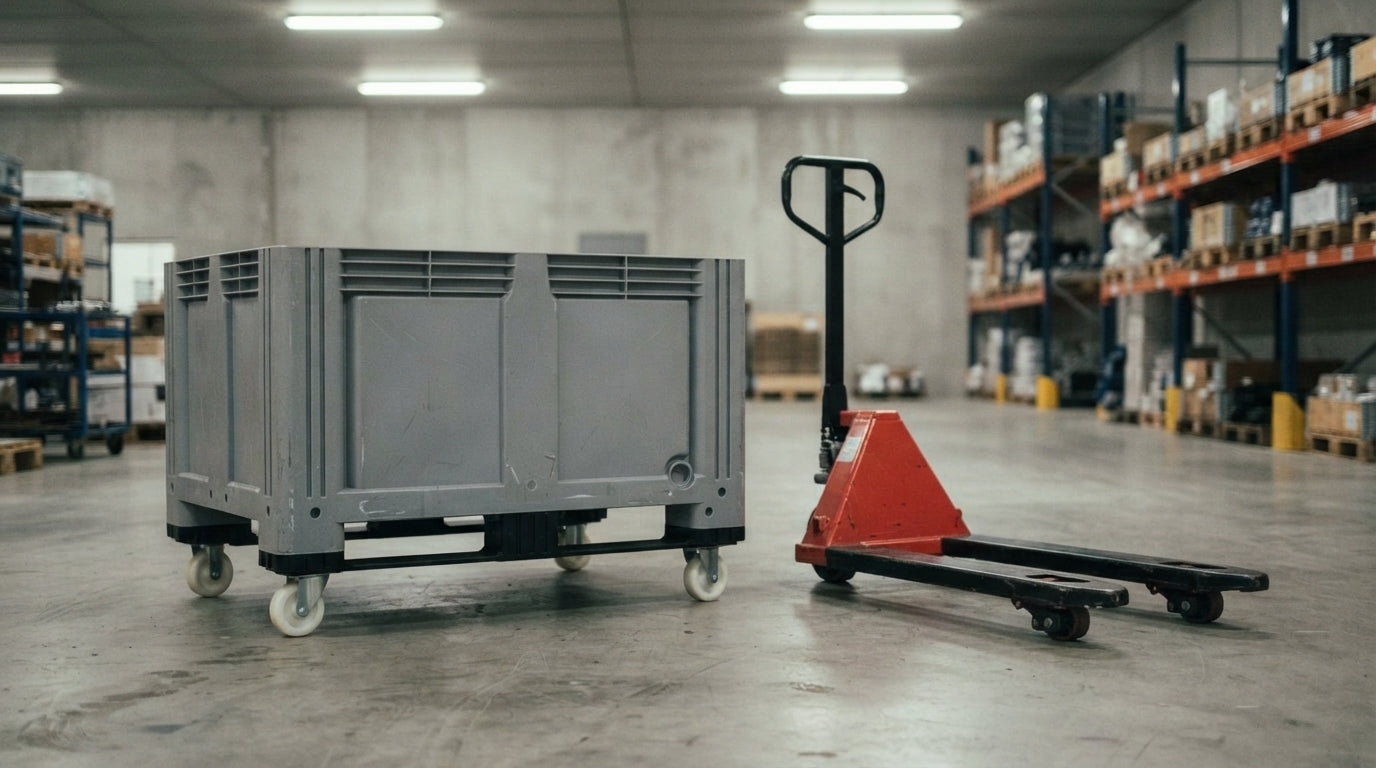

Moving a mobile pallet box loaded with 300kg of components across a production floor — without a forklift, without a second person, and without rearranging everything around it — is either a ten-second job or a twenty-minute argument with a hand pallet truck. Which one depends almost entirely on whether your box has castors. This guide covers when a pallet box on wheels is the right answer, when it isn't, and what to check before you order one.
What Is a Mobile Pallet Box?
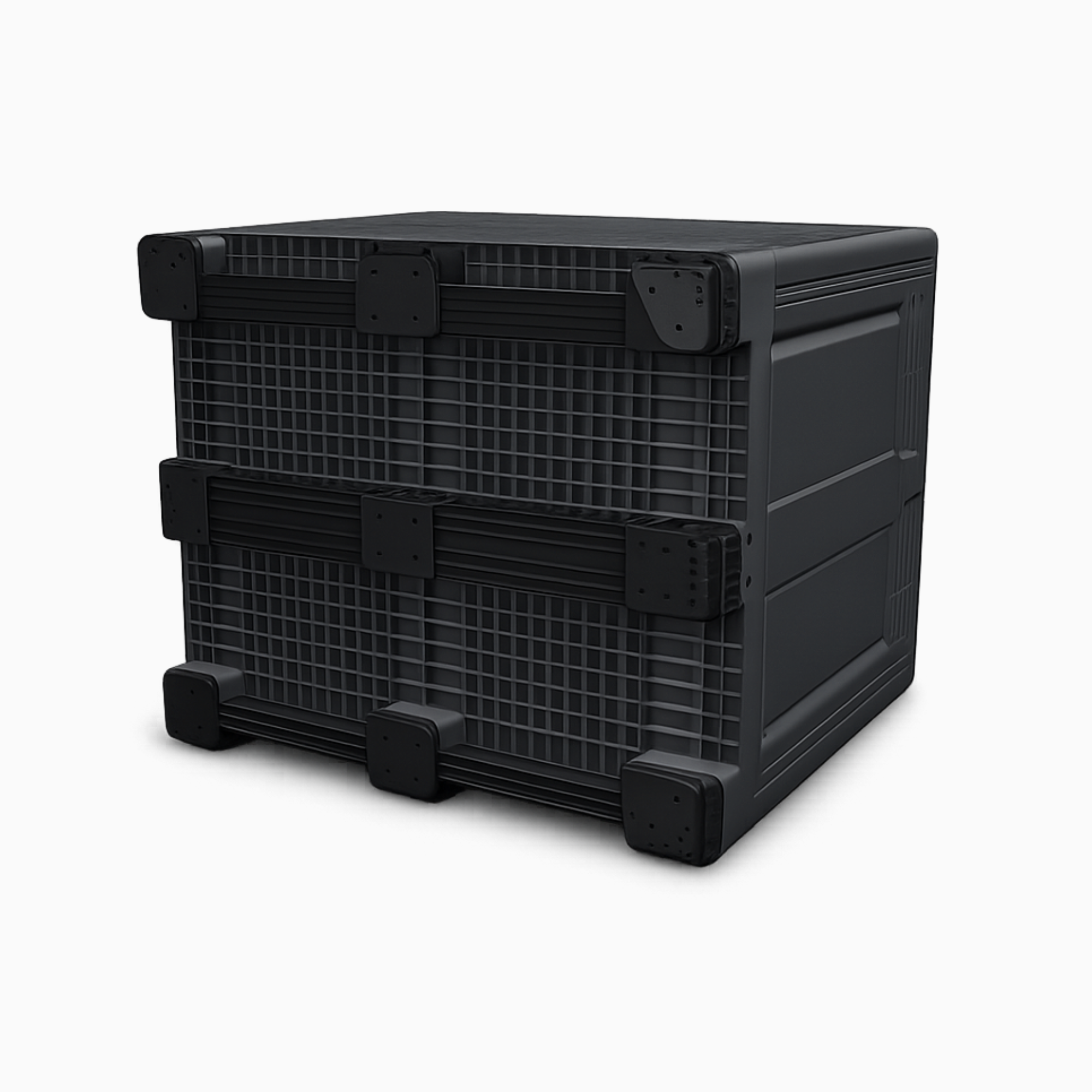
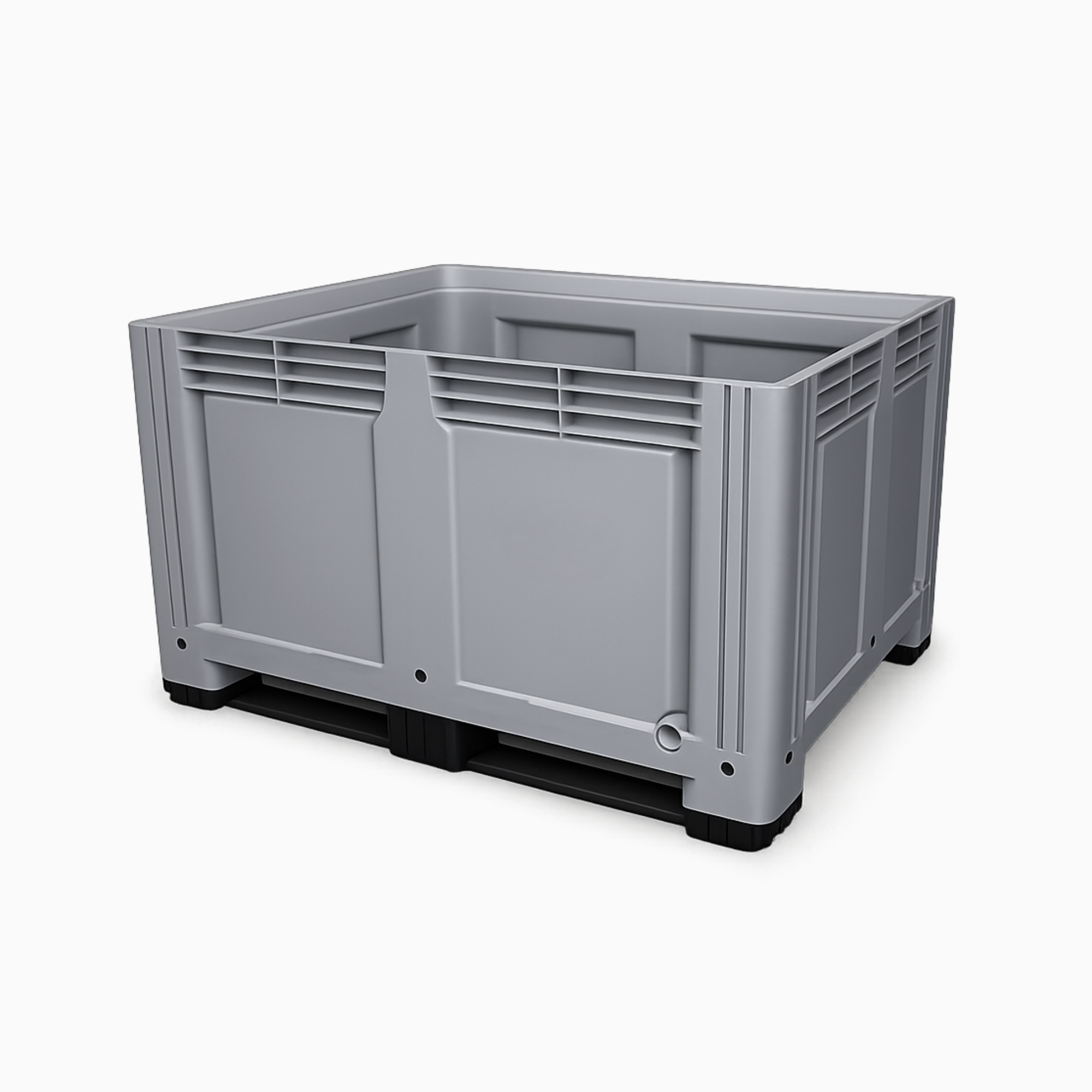
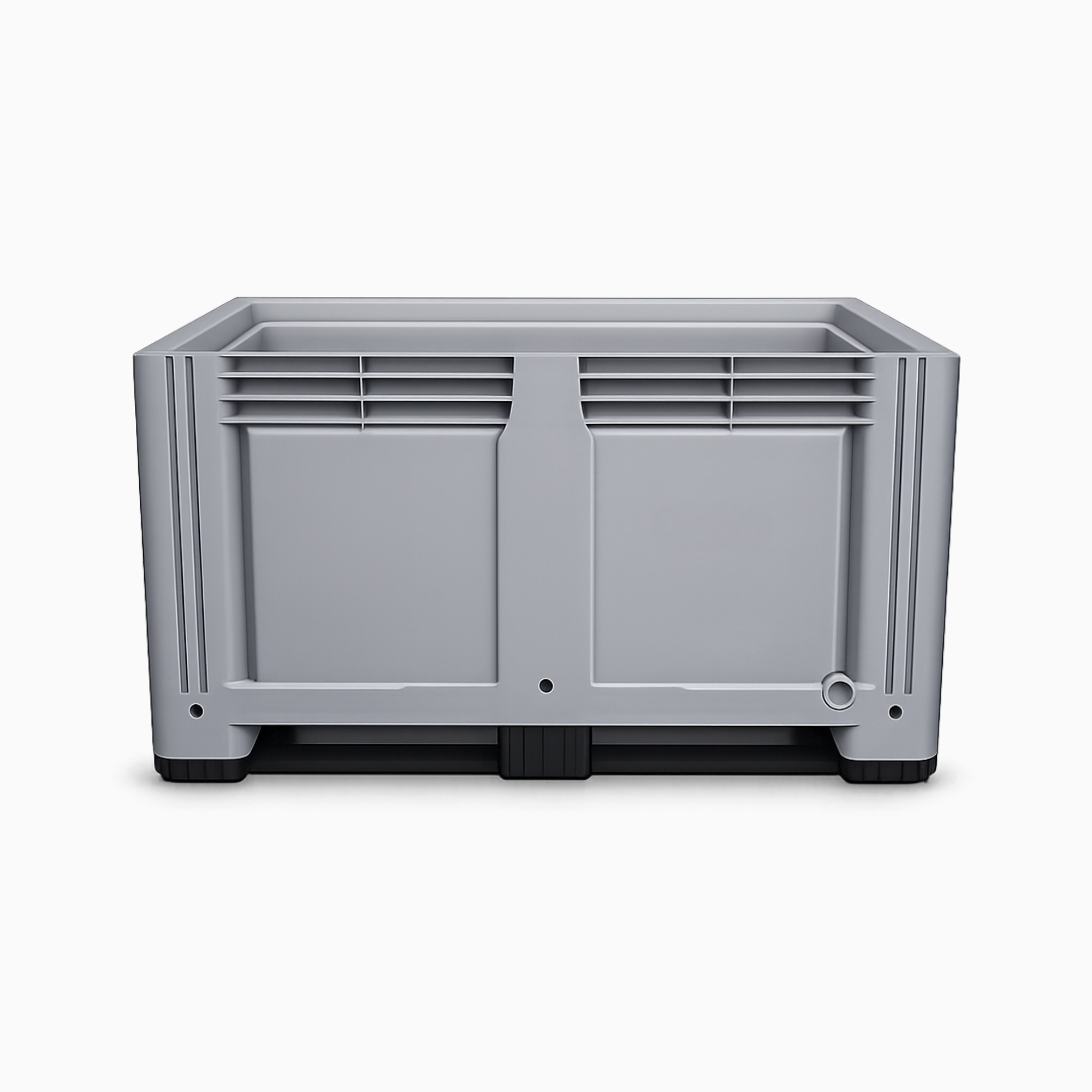
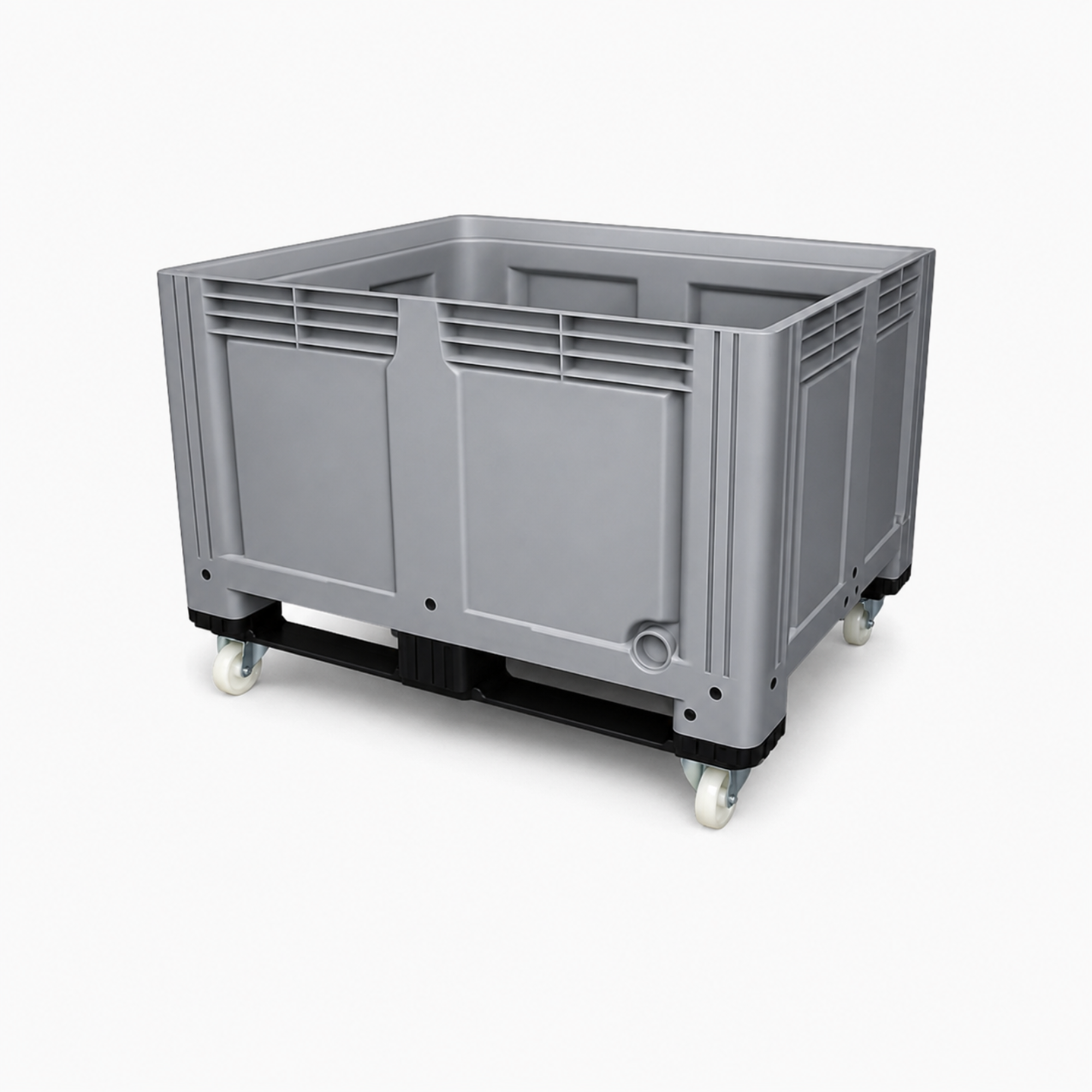
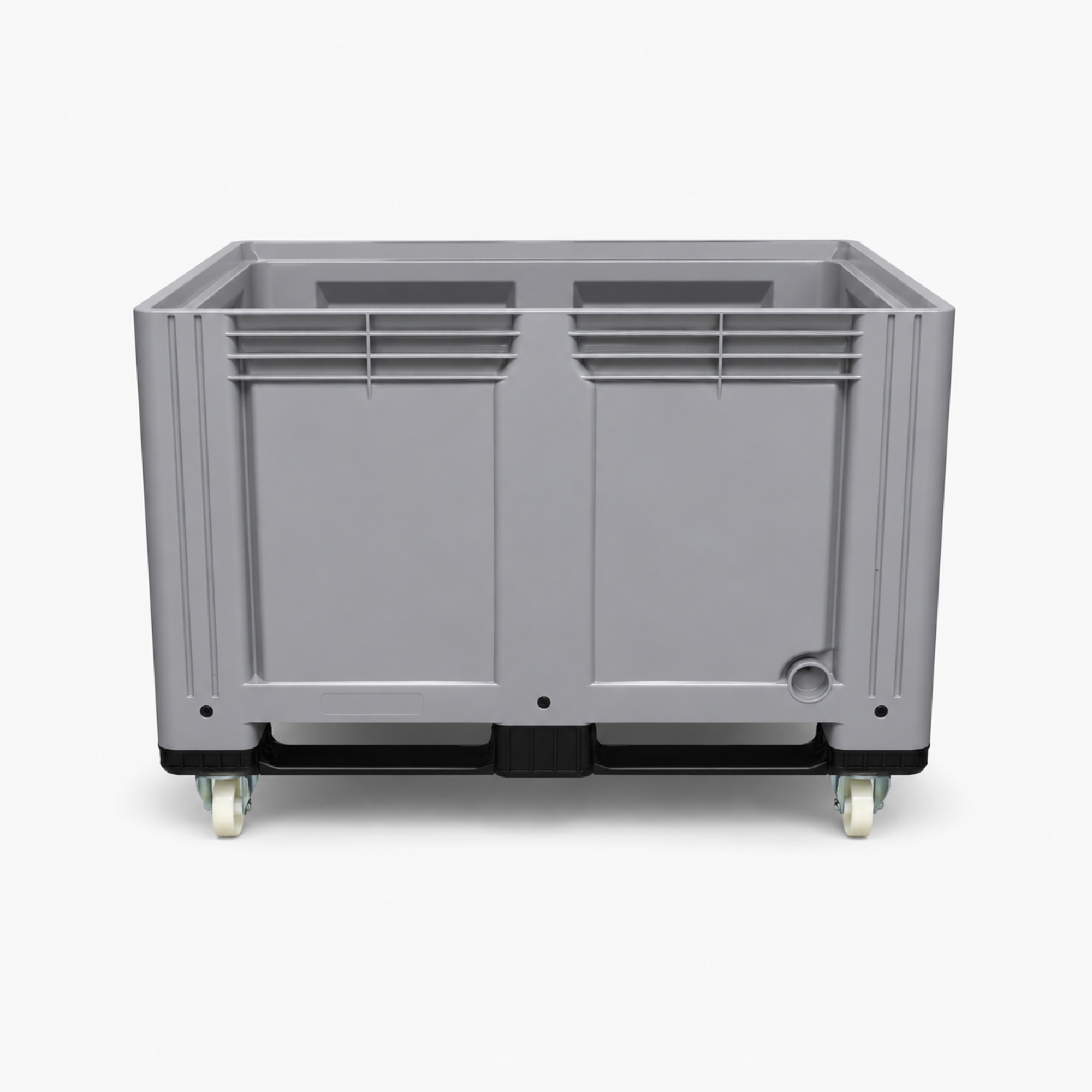
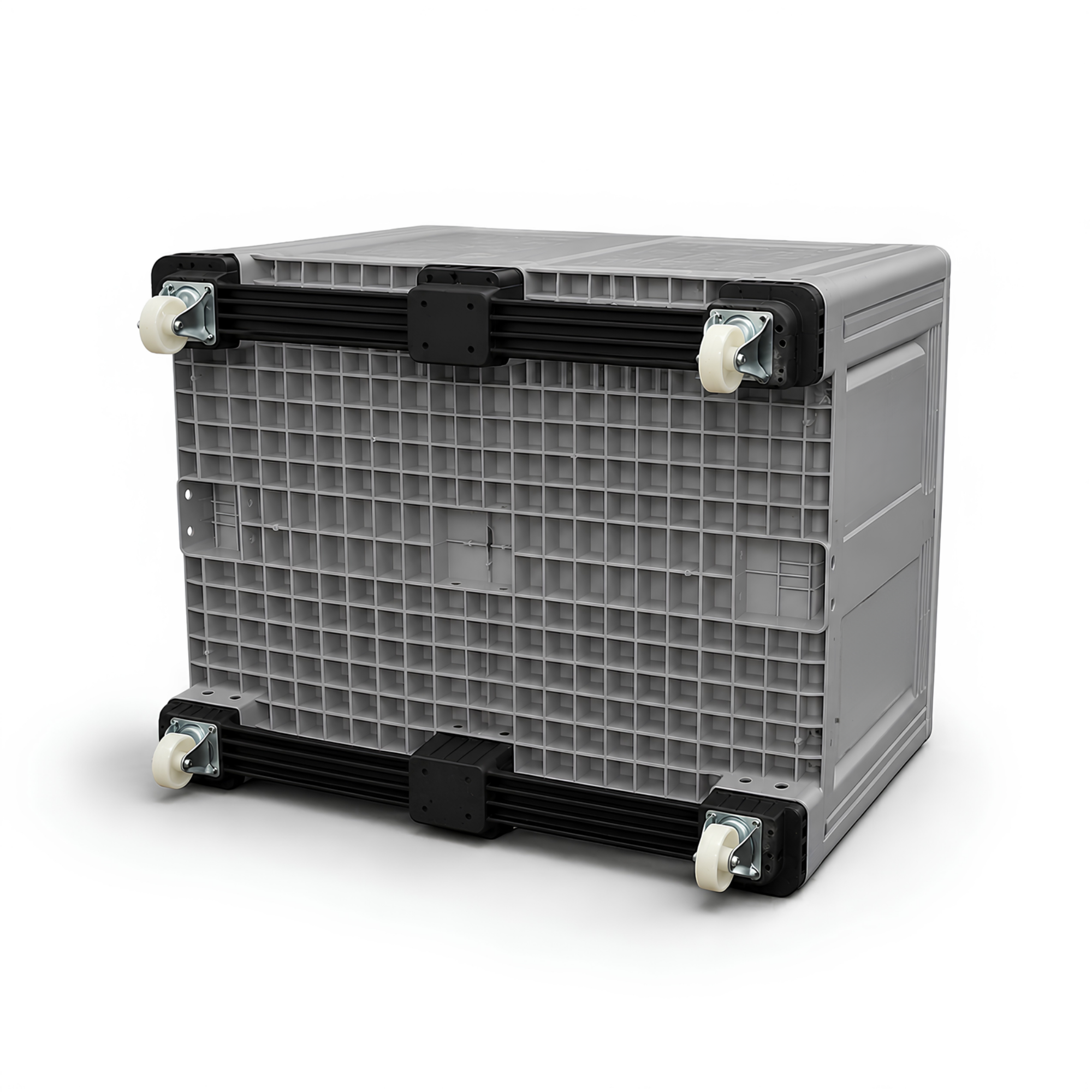
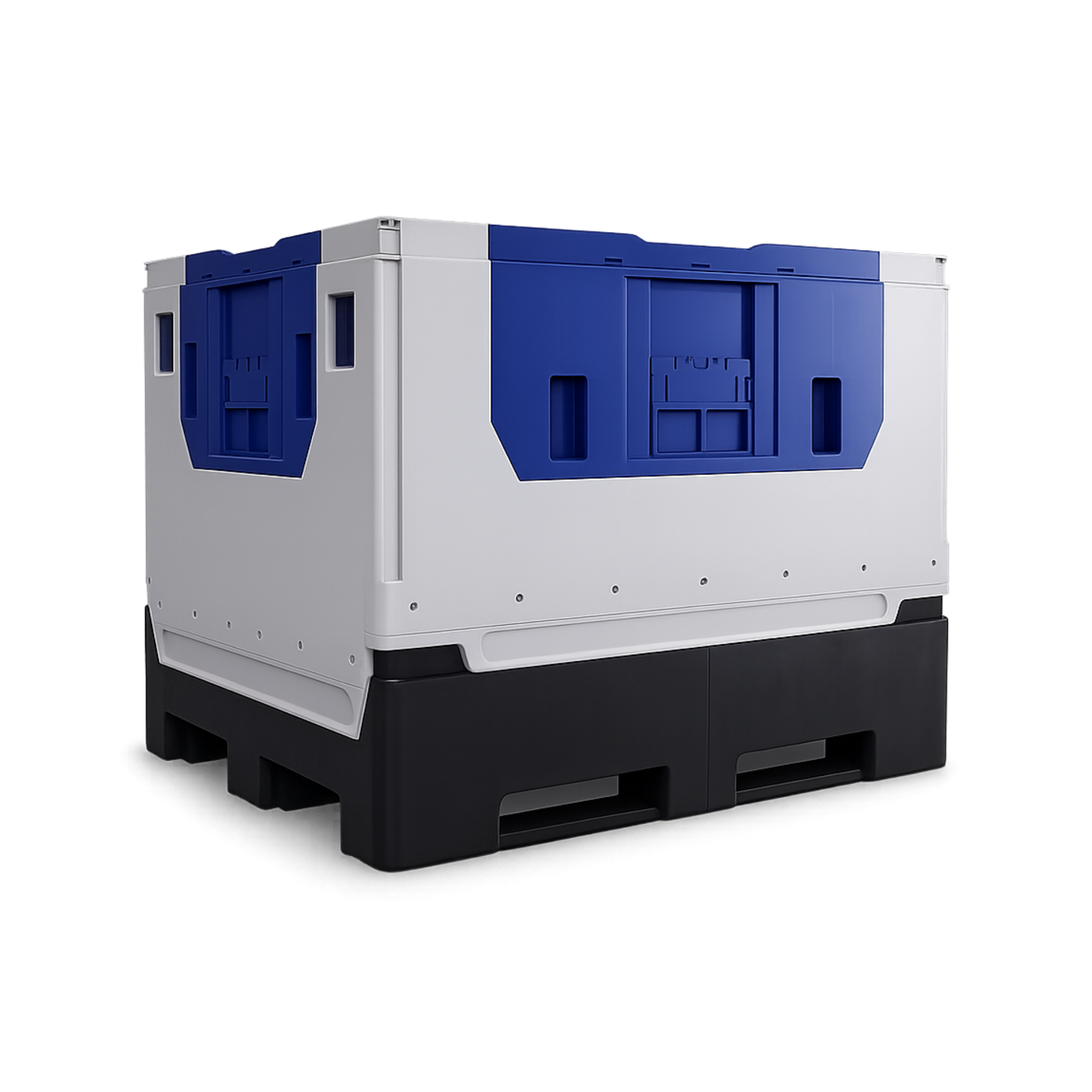
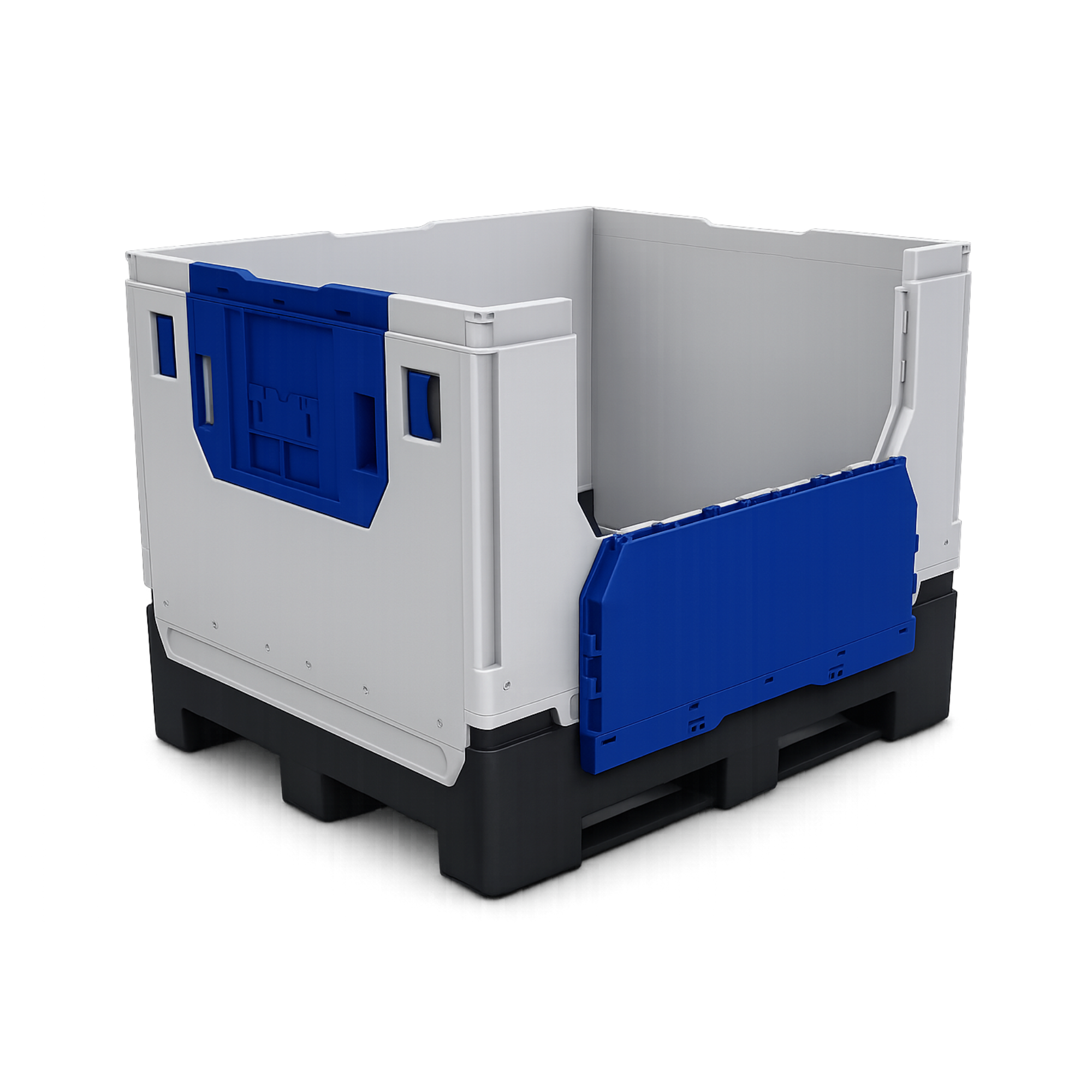
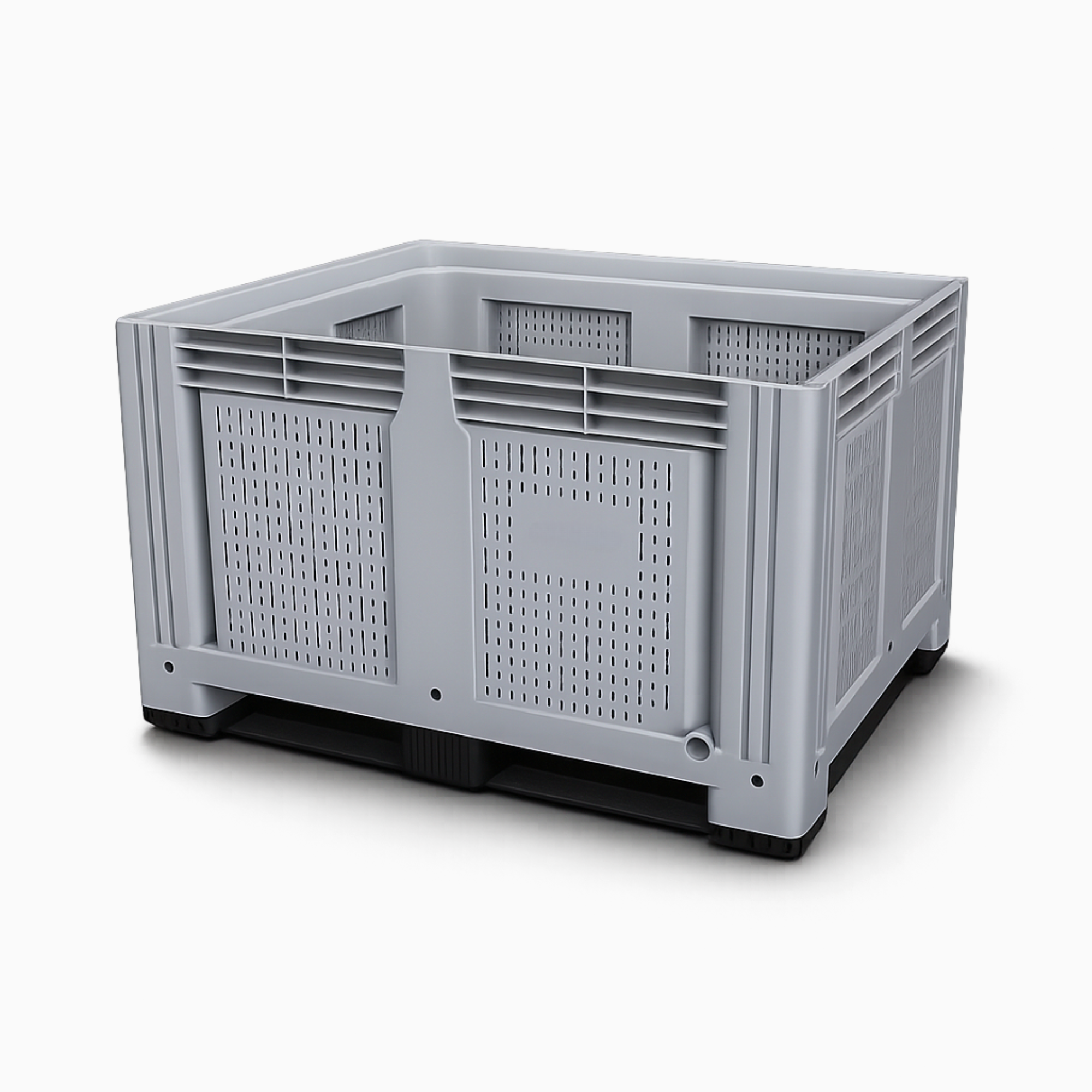
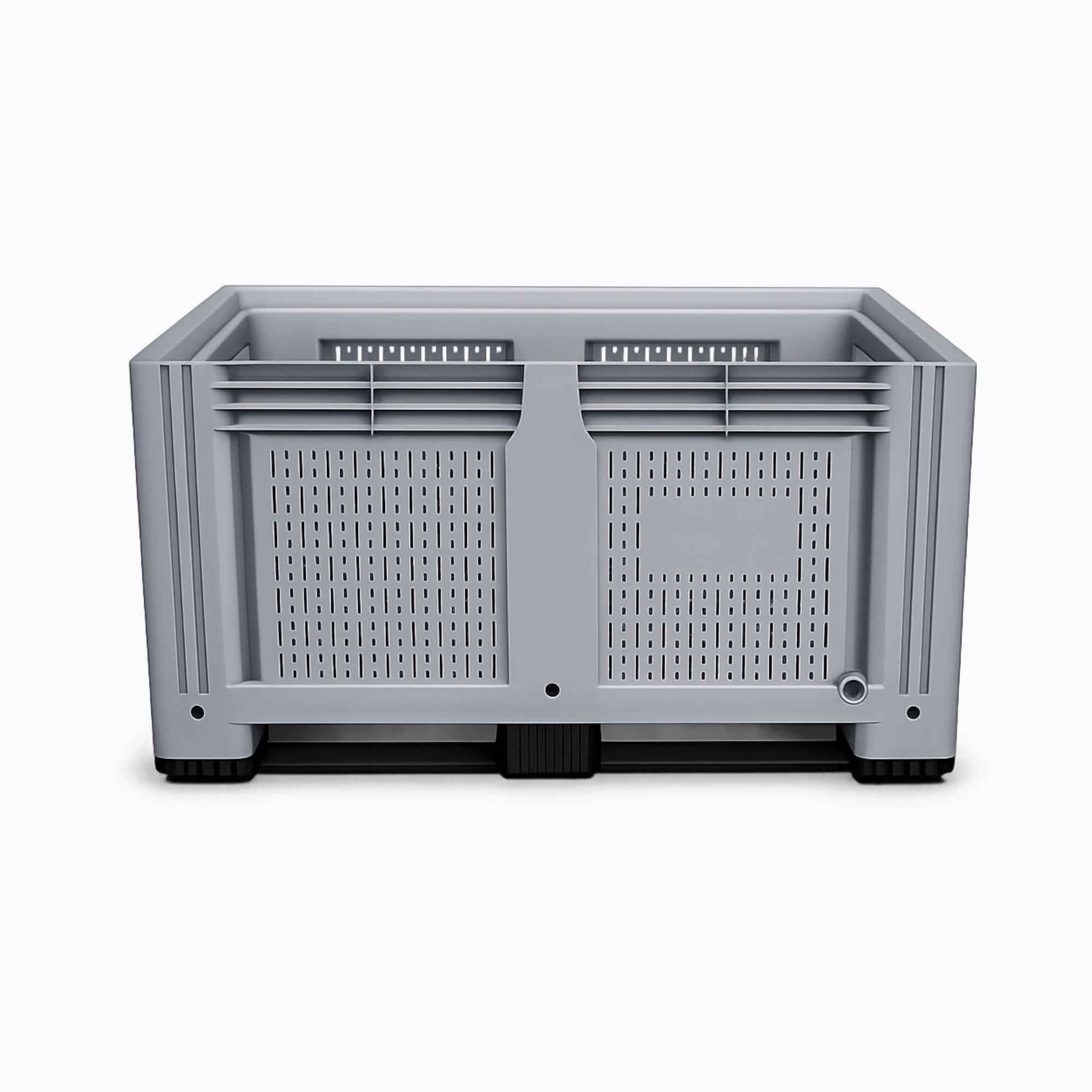
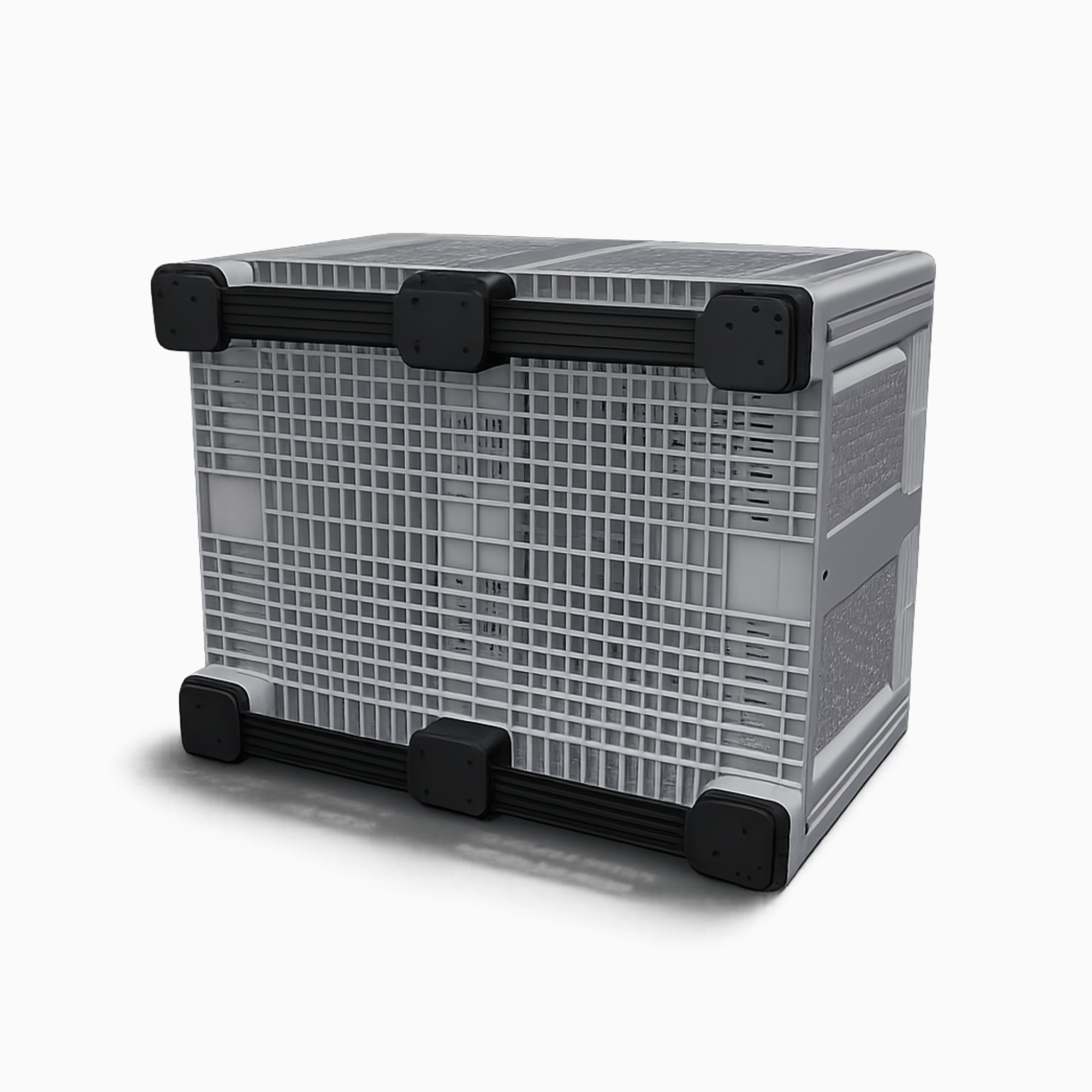
A mobile pallet box — also called a wheeled pallet box or pallet box with castors — is a heavy-duty HDPE plastic container built on a frame with four integrated swivel castors. The box itself is identical in construction to a standard pallet box: ribbed walls for rigidity, smooth internal corners for cleaning, and a capacity of 610 litres. The difference is the base. Instead of a solid runner frame that sits flat on a pallet or floor, the mobile variant has castor mounts built directly into the corners of the base frame.
The castors are typically 100–125mm diameter, rated for smooth indoor surfaces, and fitted on all four corners. All four swivel, which gives the box omnidirectional movement — you can push it sideways, spin it on the spot, or angle it into a tight space with one hand. The front two castors include a locking brake to fix the box in position once placed.
Standard footprints follow the same dimensions as regular pallet boxes: 1200×1000mm (UK pallet standard) and 1200×800mm (Euro pallet standard). The UK model is rated to 500kg dynamic load; the Euro model to 400kg. The HDPE construction is food contact safe, UV resistant, and chemical resistant.

The Problem They Solve: Moving a Loaded Pallet Box Without a Forklift
If you've ever tried to push a 400kg pallet box sideways across a concrete floor with a hand pallet truck, you'll know exactly what this article is about. A standard hand pallet truck moves forward and back. To change direction you have to lift the forks, reposition the truck, re-enter the pallet runners, and try again. On a straight run across a clear warehouse floor that's manageable. The moment you need to move a loaded box laterally — into a production bay, out of a loading bay, around a column — it becomes a two-person job that interrupts everything else.
There's also a tipping risk. Pallet boxes have a high centre of gravity when loaded. Turning a laden box at speed on a pallet truck — especially on slightly uneven flooring — creates real instability. Most warehouses with pallet box fleets have at least one story about a near-miss or a spillage during a tight-space manoeuvre.
Integrated castors eliminate the problem. One person can reposition a fully loaded mobile pallet box in any direction, without lifting equipment, without a second operator. The swivel action means cornering is smooth rather than a pivot-and-push sequence. Lock the front castors when it's in position and the box stays put.
When a Mobile Pallet Box Makes Sense
✓ Choose this if
- You move the same box repeatedly without fork access
- You're working in tight spaces or restricted aisles
- One person needs to reposition loads independently
- Your floor is smooth, level, and indoors
- Forklift availability is limited or scheduled
✗ Think twice if
- Loads regularly exceed 500kg
- You need outdoor or rough-surface use on standard castors
- You're moving boxes long distances across a large site
- Fork access is reliable and movement is very occasional
Manufacturing Floors and Production Lines
The most common use case. Components arrive in a mobile pallet box at one end of a production line and need to travel — in stages, or in full — along the line as operators work through the load. With a standard box, that movement requires a forklift or a pallet truck and a gap in the floor plan wide enough to manoeuvre. With a mobile box, an operator pushes it to the next station, locks the castors, and walks back. No equipment, no waiting, no interruption to the flow.
Floor surface matters here. Sealed concrete, resin-coated floors, and smooth epoxy all work well. If your production floor has deep expansion joints, grating sections, or significant surface irregularities, test the movement before committing to a full fleet.
Warehouses with Limited or No Forklift Access
Mezzanines, ground-floor picking zones, and areas beneath racking where forklift entry is restricted are natural fits for a heavy duty mobile pallet box. The 360° castor action means the box can be pulled out from a position, rotated, and moved without needing the turning circle a pallet truck requires — significantly narrower aisle widths are workable.
If your warehouse has mixed access — forklift in the main bay, manual handling in secondary areas — a mobile pallet box moves freely between both zones without needing to transfer the load.
Retail Stockrooms and Shop Floors
Retail stock typically arrives in volumes that don't justify pallet movement equipment on the shop floor, but that's heavy enough to make moving a standard box by hand impractical. A mobile pallet box handles this cleanly: loaded in the delivery bay, pushed through the stockroom, rolled out to the shop floor, locked in place for staff to pick from. The front locking castors fix the box solidly once it's in position — a box without a brake on a shop floor is a hazard.
Events, Venues, and Temporary Setups
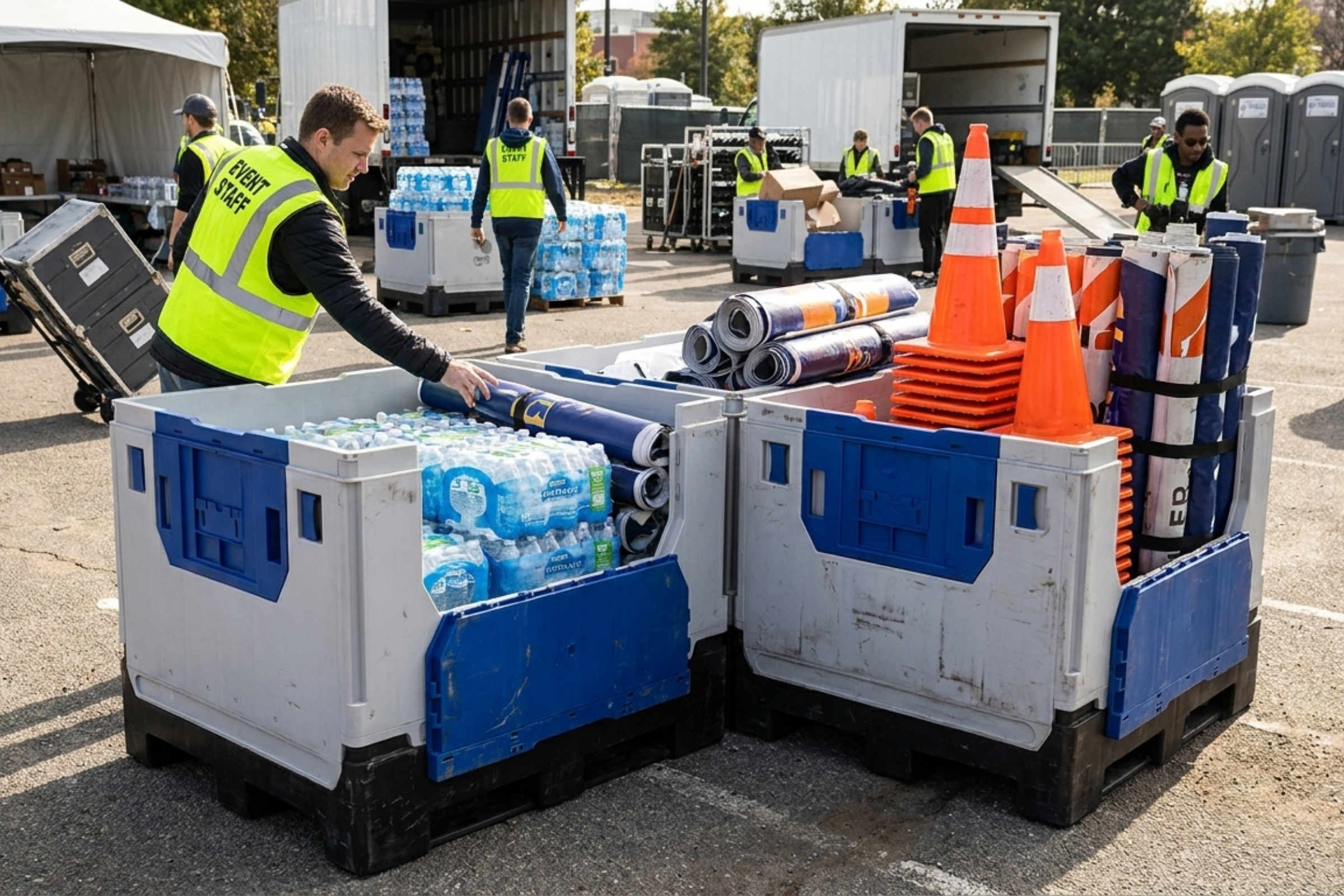
Equipment, props, AV gear, or catering supplies need to be moved and repositioned multiple times across a venue, often by general staff rather than trained warehouse operators. A mobile pallet box handles this well — no equipment skill required to move it, large enough to consolidate multiple loads into one trip, and easily repositioned between sessions. Primarily an indoor application; see the outdoor section below if you need external capability.
Food Production and Catering Facilities
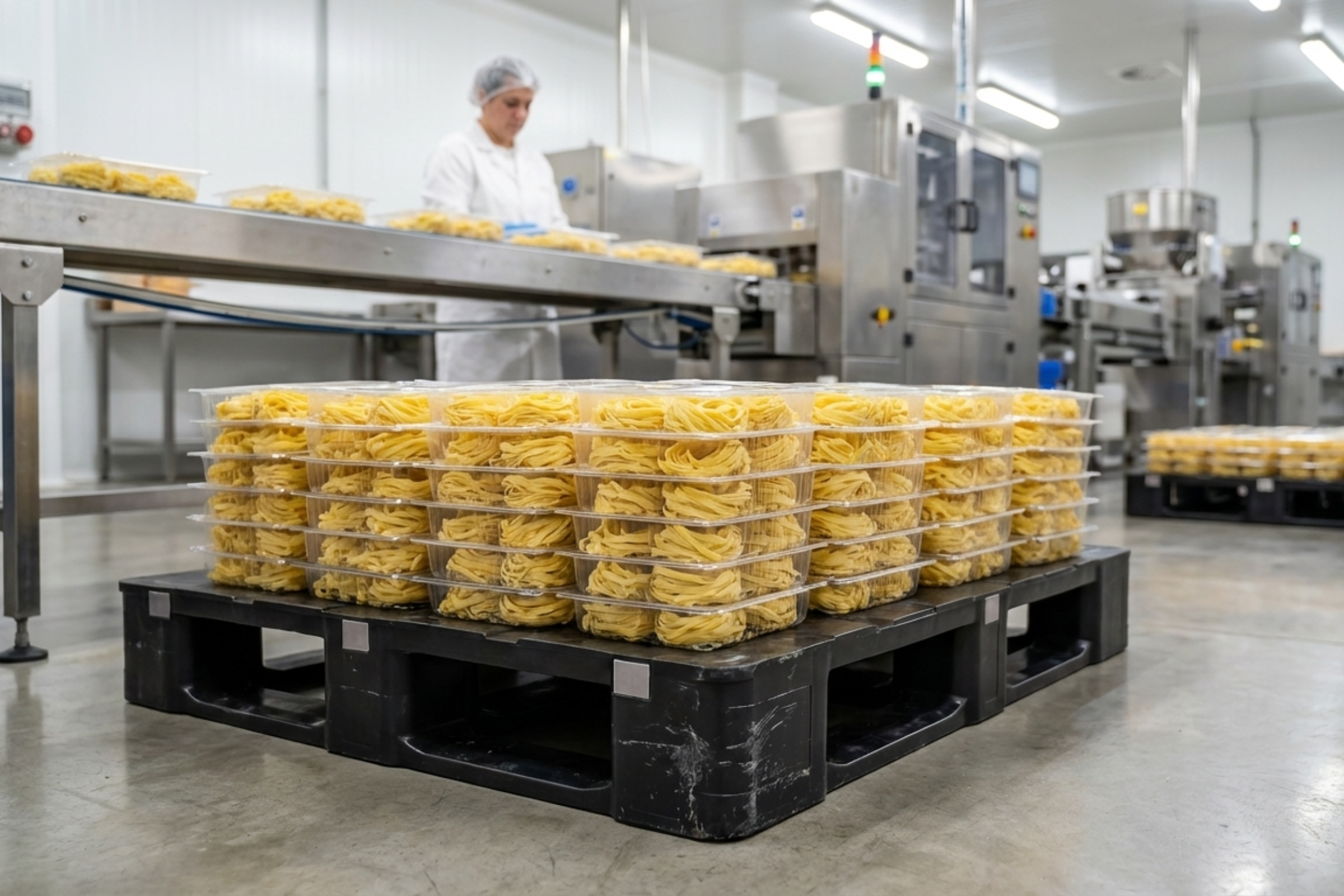
Moving ingredients, packaging, or finished product between cold storage and production areas without fork interruption is a recurring need in food manufacturing. The HDPE material is food contact safe and easy to clean, and the mobility means one person can retrieve a loaded box from cold storage and bring it to the production point without waiting for a vehicle or a second operator.
For operations with specific food-grade or temperature-controlled requirements, take a look at our food-grade pallet box — the use cases overlap but the specification requirements differ.
When a Mobile Pallet Box Is Not the Right Choice
Most suppliers don't tell you when not to buy their product. Here's where the standard mobile pallet box falls short — buying the wrong product wastes your money and ours.
Outdoor or rough-surface use on standard castors. The standard swivel castors are designed for smooth indoor surfaces and are not rated for gravel, wet tarmac, drainage channels, or significant ramps. That said, if you need outdoor or rough-terrain capability, get in touch — we can supply boxes with more rugged wheel configurations and there's no minimum order quantity for custom builds.
Loads consistently over 500kg. The 500kg rating applies to the castor mountings. Regularly exceeding it will damage the castor fixtures and eventually compromise the base frame. If your loads are consistently heavier, talk to us about alternatives.
Long-distance movement across a large facility. If a box needs to travel 200 metres across a distribution centre, a pallet truck and a standard pallet box is faster and less tiring. The mobile pallet box is optimised for short repositioning moves in confined areas.
Stacking: Better Than You'd Expect
The one exception to be aware of: the bottom box in a loaded stack cannot be wheeled, because it is bearing the full weight of everything above it through its castor mountings. If you need to move the stack, break it down first.
For operations where high-density storage matters, this makes the mobile pallet box significantly more versatile than it might first appear. You're not choosing between mobility and storage density — you get both.
If stacking flexibility across different use cases is a priority, it's also worth comparing with collapsible pallet boxes — a different approach to the same underlying problem.
Mobile Pallet Box vs. Hand Pallet Truck
If you can move your pallet box from A to B along a clear run with a hand pallet truck and have adequate floor space to manoeuvre, a truck may be all you need. The mobile pallet box is not a better version of a pallet truck — it's a different tool that solves a different problem.

| Factor | Mobile Pallet Box | Hand Pallet Truck + Standard Box |
|---|---|---|
| Omnidirectional movement | ✓ Yes — swivel castors, any direction | ✗ No — forward and back only |
| Requires separate equipment | ✓ No — castors are integrated | ✗ Yes — truck required |
| One-person manoeuvrability | ✓ Yes — one person, any direction | Depends on load weight and surface |
| Tight spaces | ✓ Yes — turns on the spot | Limited — needs run-up room |
| Stack when loaded | ✓ Yes — up to 10 high (bottom box cannot be wheeled while stacked) | ✓ Yes |
| Outdoor / rough surface | Standard castors: indoor only. Rugged options available — contact us | Limited — most hand trucks designed for smooth surfaces too |
| Cost | £210 (castors included) | £200–£300+ (truck alone) + pallet box cost |
Specifications to Check Before You Buy
Before ordering, run through these against your specific operation.
Floor surface. Smooth concrete, resin, or tiled only on standard castors. Need something tougher? Get in touch.
Load capacity. 500kg dynamic. The castor mountings are the limiting component — consistently exceeding the rated capacity damages the mounts and voids warranty.
Castor type. Swivel on all four corners. Locking brake on front two to fix position when stationary.
Footprint — UK model. 1200×1000mm external. Fits UK standard pallet sizes. Measure aisle widths and doorway clearances before ordering.
Footprint — Euro model. 1200×800mm external. Rated to 400kg, 550 litre capacity. If your operation runs Euro pallets throughout, this is the correct variant.
Internal volume. 610 litres (UK model) / 550 litres (Euro model). Check your load density — a box full of dense material will hit the weight limit long before it's visually full.
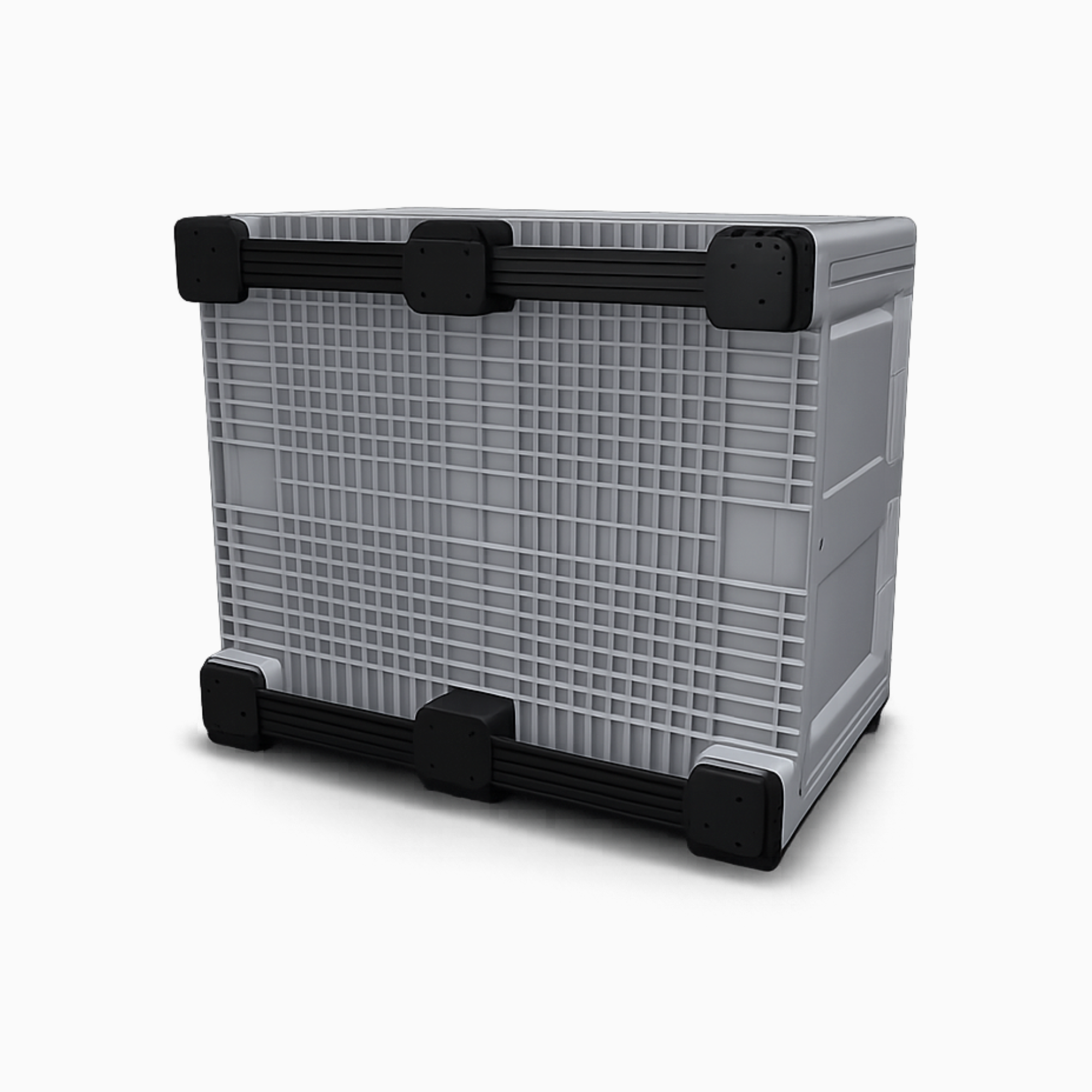
Stacking. Up to 10 high when loaded — castors nest into the base of the box above, transferring weight through the structure, not the wheels. The bottom box in a stack cannot be wheeled while bearing a loaded stack.
Material. HDPE throughout. Food contact safe, UV resistant, chemical resistant. Smooth internal corners.
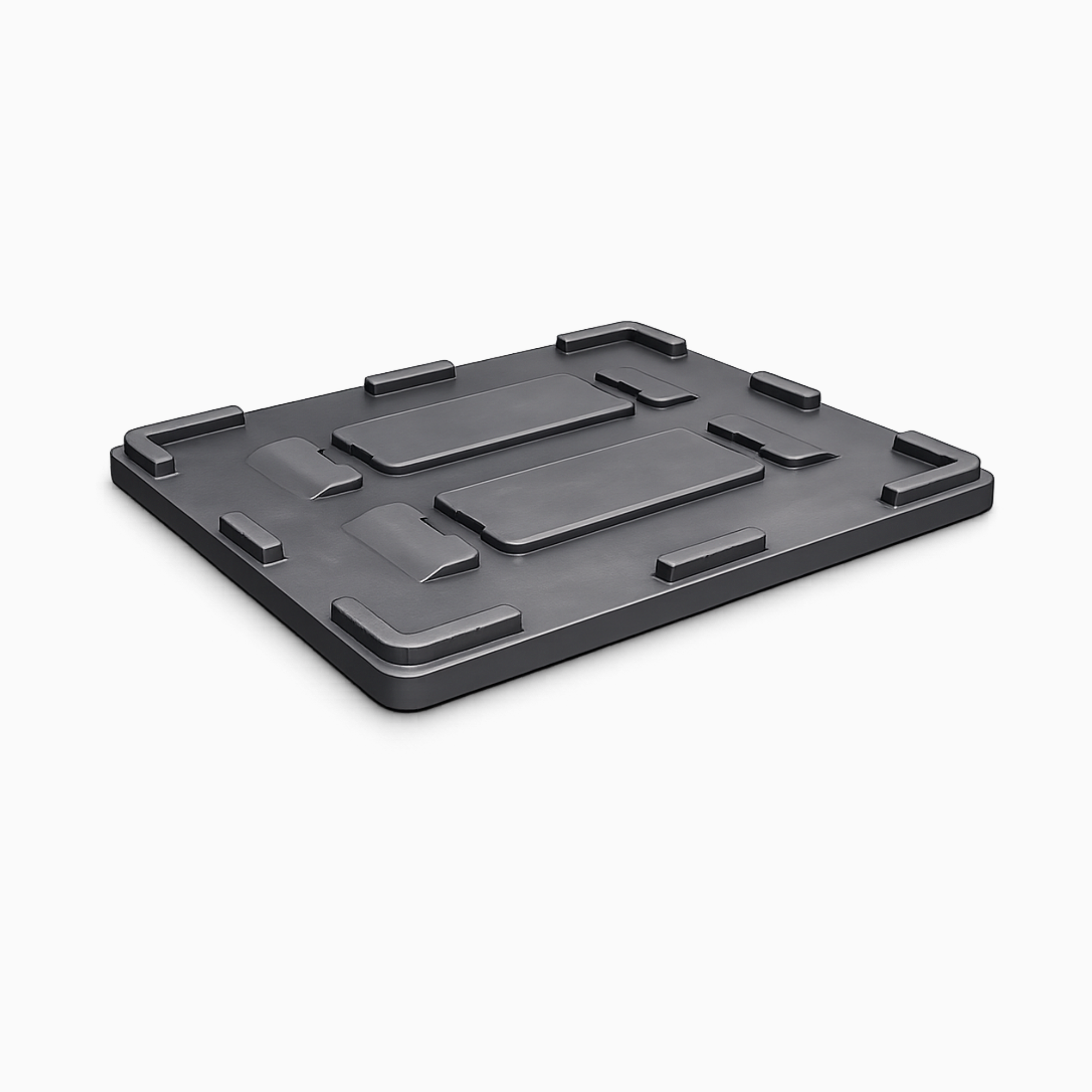
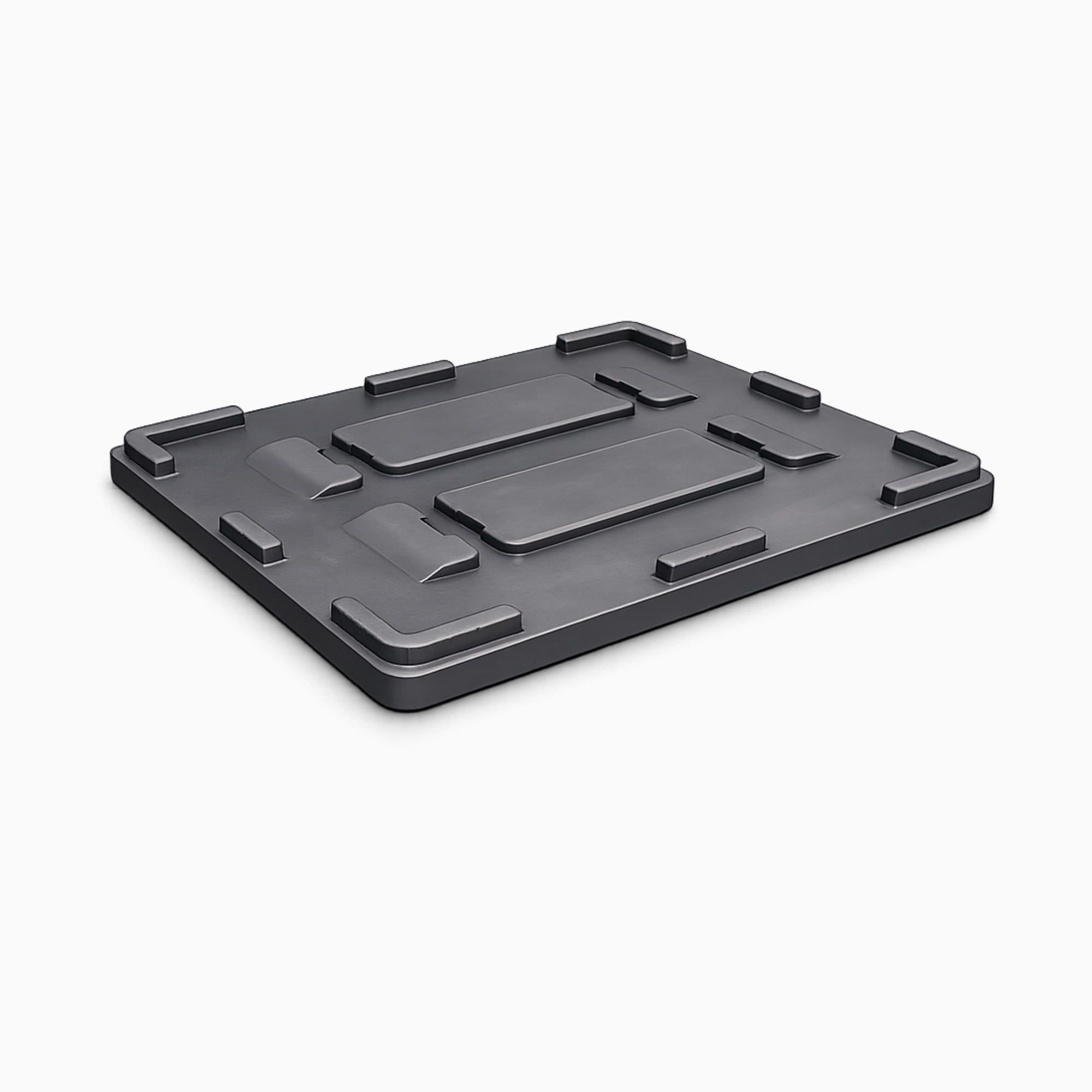
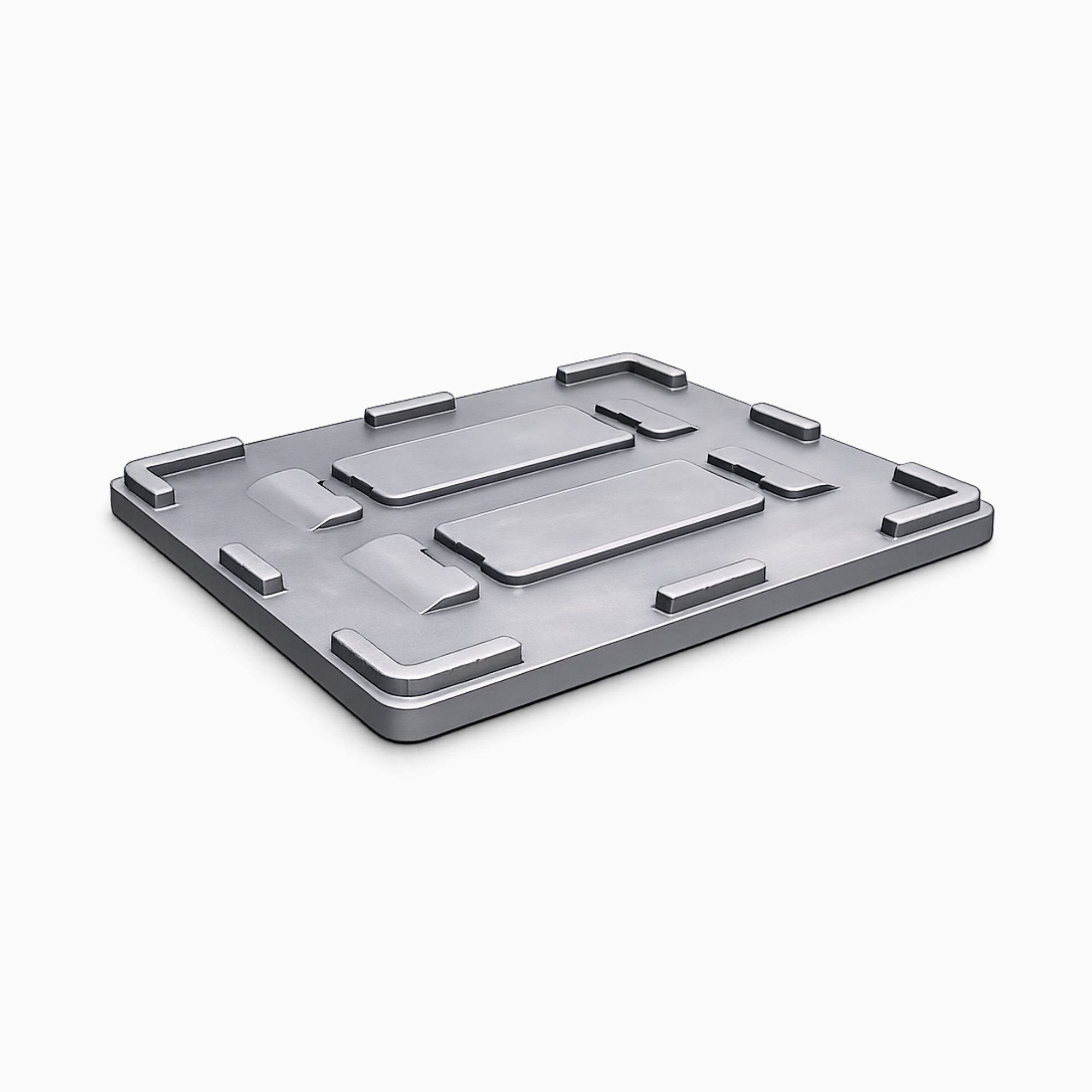
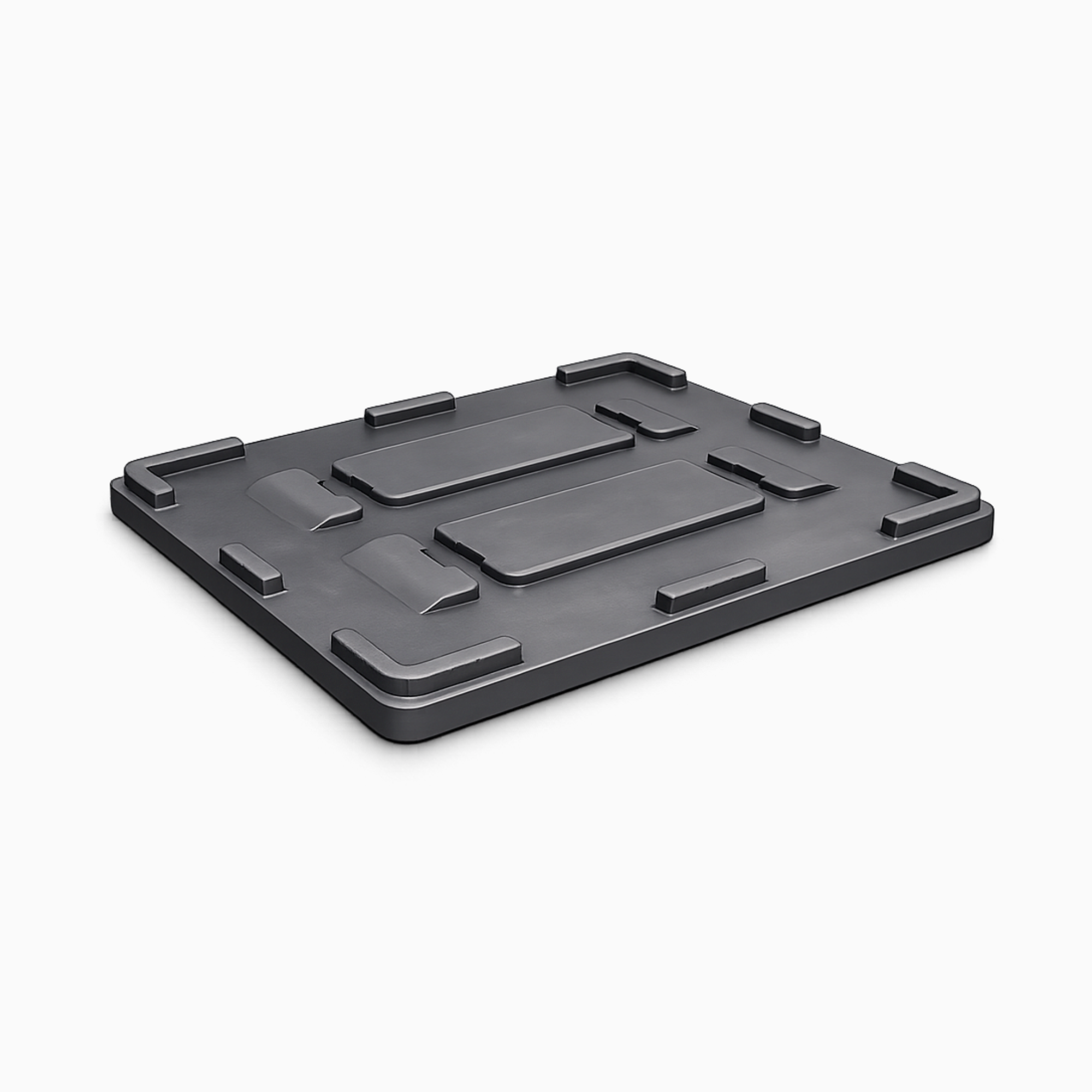
Lids. Standard pallet box lids are compatible. Order separately, specifying UK or Euro footprint.
Mobile Pallet Boxes at Stack Industrial
Stack Industrial stocks two variants — UK footprint and Euro footprint. Both are heavy-duty HDPE with full 360° swivel castors and front locking brakes, priced at £210 (UK) and £199 (Euro) including delivery.

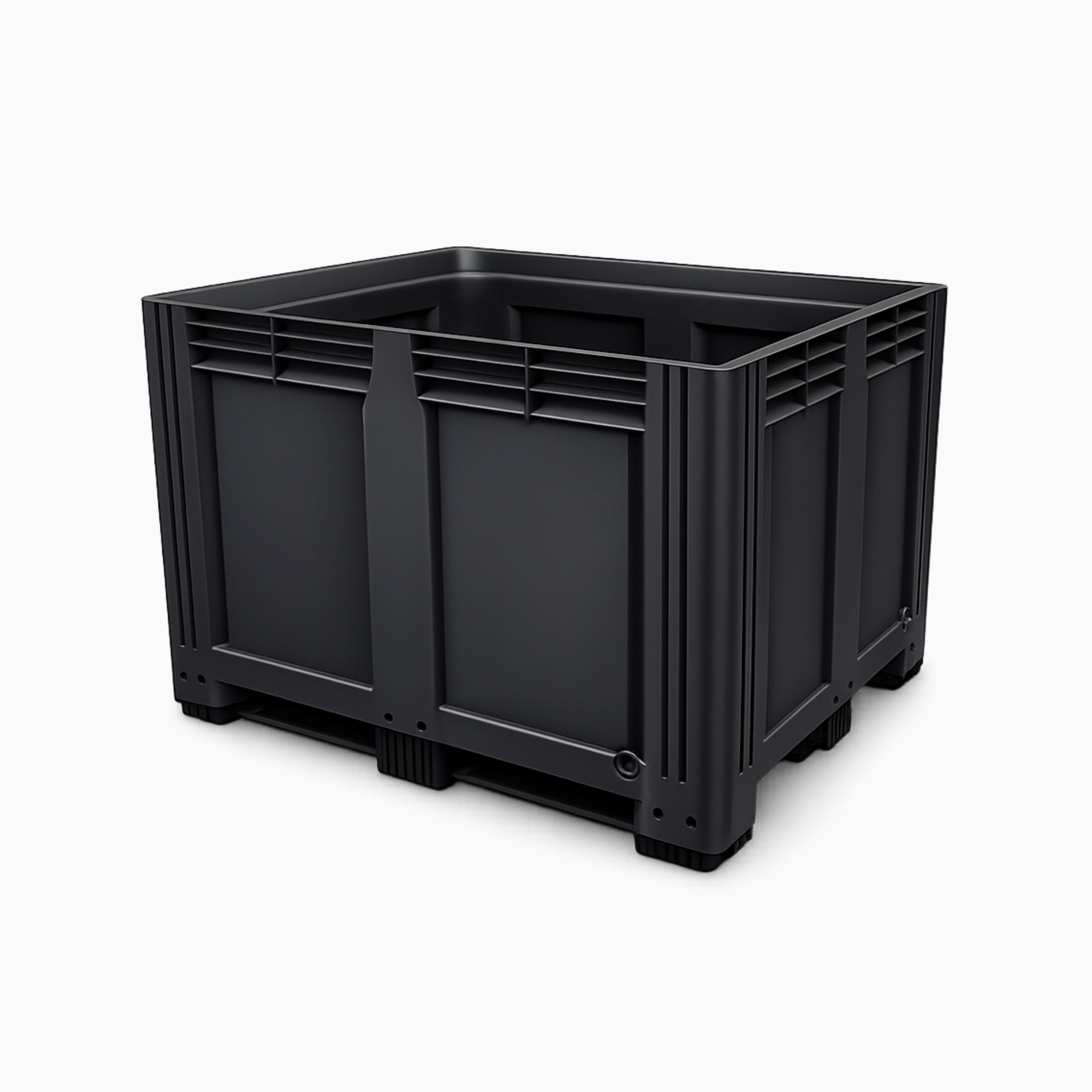
UK Standard — 1200×1000mm
Heavy Duty Mobile Pallet Box | Grey | Swivel Castors
500kg · 610L
£210

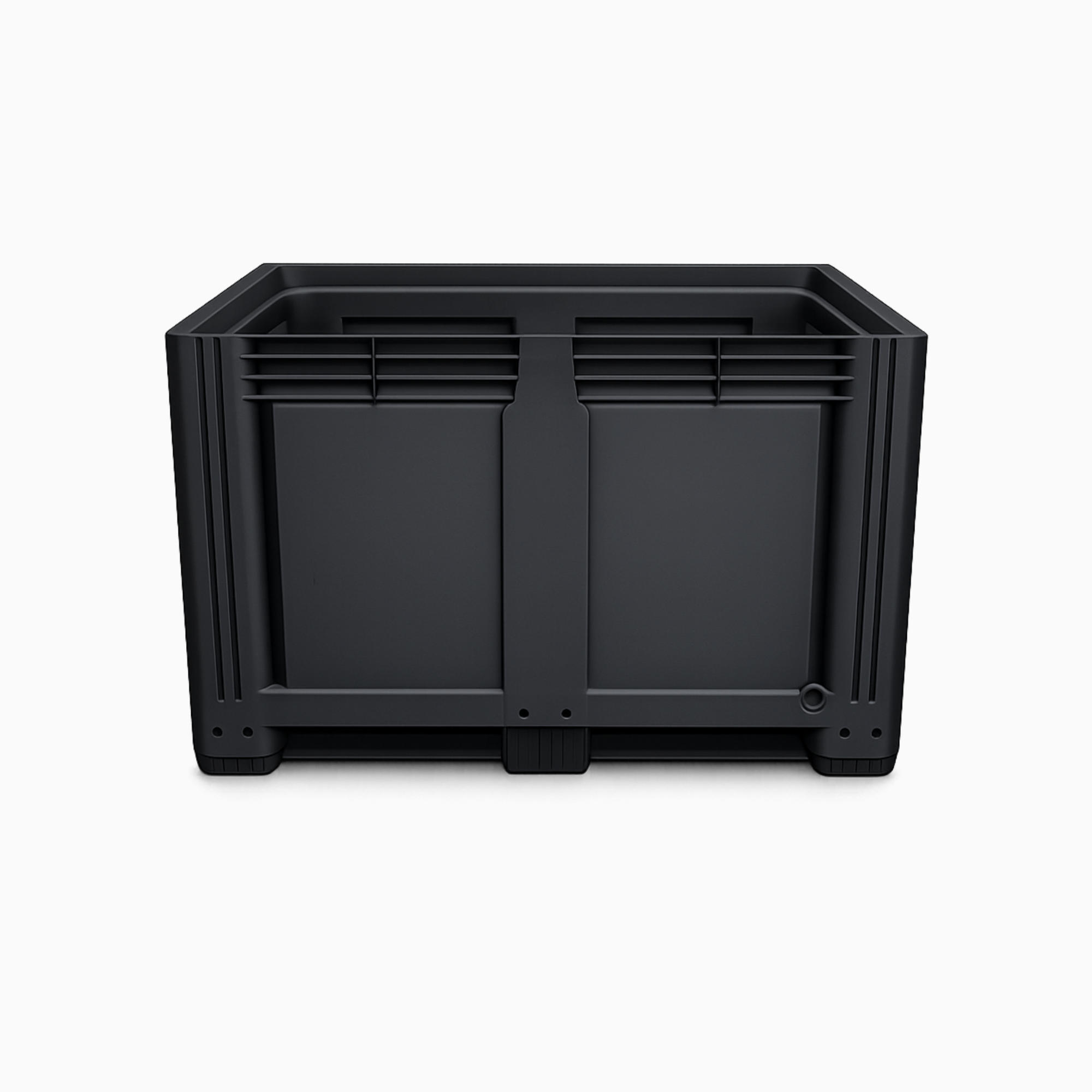
Euro Standard — 1200×800mm
Heavy Duty Euro Mobile Pallet Box | Grey | Swivel Castors
400kg · 550L
£199
Need outdoor capability or a non-standard wheel spec? Get in touch — we can put together a solution with no minimum order requirement.
Frequently Asked Questions
What is a mobile pallet box?
A mobile pallet box is a heavy-duty plastic storage container with integrated swivel castors on its base. It combines the large capacity of a standard pallet box (610 litres) with the ability to be repositioned by hand without a forklift or pallet truck. They are rated to around 500kg and are used in warehouses, manufacturing, and retail environments.
How much weight can a mobile pallet box hold?
Stack Industrial's mobile pallet boxes are rated to 500kg. The castor mountings are the limiting factor — consistently overloading above the rated capacity will damage the castor fixtures and void the warranty. If your loads regularly exceed 500kg, get in touch and we can discuss alternative configurations.
Can mobile pallet boxes be stacked?
Yes. These boxes are designed so that when stacked, the castors nest into the base of the box above, transferring weight through the box structure — not through the wheels. They stack up to 10 high, just like standard pallet boxes. The one exception: the bottom box in a loaded stack cannot be wheeled while bearing the weight of the stack above it.
Can a mobile pallet box be used outdoors?
Standard mobile pallet boxes are designed for smooth indoor surfaces. For outdoor or rough-terrain use, Stack Industrial can supply pallet boxes with more rugged wheel configurations — get in touch to discuss your requirements. There is no minimum order quantity for custom wheel builds.
What floor surfaces are suitable for a mobile pallet box?
Mobile pallet boxes perform best on smooth, level indoor surfaces — sealed concrete, resin floors, warehouse tiles, or smooth epoxy coatings. They are not suitable on standard castors for rough concrete, expansion joints, ramps, or external paving. If your floor has significant irregularities, test manoeuvrability with a light load before committing to a full deployment.
Can a mobile pallet box be fitted with a lid?
Yes. Standard pallet box lids are compatible with mobile pallet boxes, as the box body shares the same external dimensions as a static pallet box. Lids are available separately and are useful for dust protection, secure storage, or transit. Check that the lid model matches your specific box dimensions — UK 1200×1000mm or Euro 1200×800mm.
What is the difference between a mobile pallet box and a pallet box on wheels?
There is no functional difference — 'mobile pallet box' and 'pallet box on wheels' refer to the same product: a plastic pallet box with integrated swivel castors. Some suppliers use 'wheeled pallet box' or 'pallet box with castors' as alternative terms. The key distinction is between integrated castors (built into the base frame) and add-on castor dollies, which are placed under a standard pallet box to achieve the same effect.
How does a mobile pallet box compare to a hand pallet truck?
A hand pallet truck is the right tool when you need to move a static pallet box from A to B along a clear run and have the floor space to manoeuvre. A mobile pallet box is better when you need omnidirectional movement in tight spaces, want to reposition without separate equipment, or move loads frequently without dedicated fork access. They are different tools for different problems — some operations use both.



UK Pallet Sizes Explained: Standard, Euro & Half Pallet Dimensions